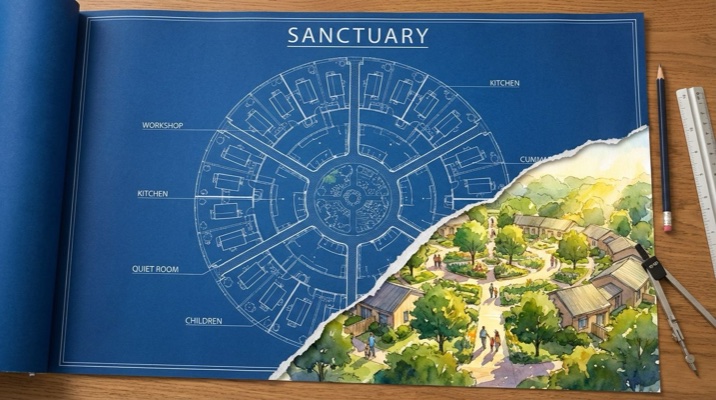
Sanctuary Design: A Zoological Framework for Human Systems
Alex Applebee and A. D. Masters
Author's Foreword: Why This Thesis Exists
This thesis did not begin in a library. It began with a phone call that arrived too late, a system that punished the wrong person, and a child who is no longer here.
The fourteen goals that drive the OMXUS project are not policy proposals. They are prevention requirements. Each one traces to a system that broke a real person. Three of those goals are the direct subject of this thesis:
Goal 4 (replace courts with restoration) (replace courts with restoration): Eradicate courts. Courts do not perform justice. They perform authority. They reward the people who put others in cages. This thesis proposes the replacement: direct approach, voucher escalation, town meeting, ViewSwap. Not because courts are imperfect and could be reformed. Because the architecture of courts -- adversarial proceedings, professional advocates, institutional memory that favours repeat players -- is structurally incapable of producing justice at the individual level. The data is in Part II. The alternative is in Part III.
Goal 5 (replace police with community response) (replace police with community response): Fire all police, justice, and corrections staff. The system provides wanted attention for unwanted results. It spends $32 billion per year in Australia and achieves 45% recidivism. The CAHOOTS model has run for 35 years. Zero people killed. Hatzolah volunteer responders arrive in 3 minutes. Ambulances take 14. The ring described in Chapter 7 reduces that to 60 seconds. The energy currently absorbed by a revenge system can be redirected into prevention infrastructure.
Goal 6 (re-employ displaced workers) (re-employ displaced workers): Re-employ all fired staff in functional positions. Nobody loses a livelihood. The skills transfer. The roles change. A prison guard who understands de-escalation becomes a community responder. A police officer who understands threat assessment becomes a safety coordinator. A judge who understands due process becomes a town meeting facilitator. Chapter 8 details the governance structures that absorb these skills.
The sanctuary design framework asks a single question that bypasses every ideological argument about justice reform: Would a zookeeper design it this way?
A zookeeper encountering the human enclosure would not ask "how do we improve the criminal justice system?" They would ask: "Why do you have a system that waits for harm to occur and then punishes the harmer? Why not design conditions where harm doesn't occur?"
That question is not naive. It is the question any competent zoo professional asks about any other species.
The escalation pathway proposed here -- direct approach, voucher escalation, town meeting, ViewSwap -- is not soft. It is structurally more rigorous than courts. In a ViewSwap, you do not argue your position before a third party. You live the other person's position. The factory owner lives on factory wages for a month. The environmentalist works in the factory. This is harder than hiring a lawyer. It is also more likely to produce resolution, because resolution requires understanding, and understanding requires experience, not argument.
This thesis is the intellectual backbone. The Zookeeper is the story. The Applebee's Report is the satire. Together they make the case that the enclosure can be redesigned -- and that the redesign is not utopian. It is engineering.
The zookeeper's report is submitted. The enclosure can be redesigned.
-- A.A. & L.N.C., March 2026
Contents
Part I: The Problem
Part II: The Evidence
Part III: The Solution
Part IV: Implications
References
Appendices
Abstract
If humans were a newly discovered species arriving at a well-designed sanctuary, would we design their enclosure the way current civilization is structured? This thesis argues the answer is demonstrably no. Every component of current human systems -- governance, justice, economics, safety, nutrition -- violates basic principles any competent zookeeper would apply to any other species.
Drawing on evidence from population health studies (Kitava, Inuit, Okinawa), behavioral economics (capuchin fairness experiments), environmental intervention research (UK gas oven suicides, honesty box studies), and workforce analysis (Australian Bureau of Statistics), this thesis proposes an integrated redesign based on three principles: (1) what the animal actually needs (the 8 life areas), (2) what scale the animal can operate at (Dunbar's 150), and (3) what technology enables without requiring utopian human nature.
The proposed system -- OMXUS -- includes a soulbound identity token verified through web of trust rather than state authority, a 60-second community emergency response network, proximity-weighted governance, and economic distribution based on existence rather than contribution. Each component addresses the same root causes (scale, isolation, opacity), creating reinforcing feedback loops rather than piecemeal reform.
The thesis integrates evidence that justice systems construct guilt -- through cultural variation in truthful speech, autism and credibility, neuroimaging of stress and prefrontal cortex function -- and argues that experience, whose it is and who gets to define it, cannot be subordinated to the system's classification.
The thesis concludes that the question "would a zookeeper design it this way?" provides a more rigorous design constraint than any ideological framework, and that the proposed system is buildable with existing technology.
Keywords: systems design, environmental determinism, crime prevention, trust networks, governance, zookeeper ethics, ViewSwap, restorative justice, community governance
Executive Summary
The Core Question
If humans arrived at a well-designed sanctuary tomorrow, would we design their enclosure the way current civilization is structured?
The answer is no. Demonstrably, evidentially, architecturally no.
The Evidence
This thesis presents four categories of evidence:
The Proposed System
OMXUS proposes an integrated redesign with five components:
Why It Works
Each component requires and reinforces the others:
You check the species guidelines. The animal is a social primate. It evolved in groups of approximately 150. It requires meaningful connection, purpose, physical movement, adequate nutrition, and the ability to contribute to its group.
None of the enclosure conditions match the species requirements.
You return to your supervisor. "The enclosure design doesn't meet the animal's needs," you report.
"Ah," says your supervisor. "But that's how it's always been done."
1.2 The Obvious Question
This thesis asks a simple question: If we were designing human systems from scratch, with no legacy infrastructure and no "that's how it's always been done," would we design them the way they currently exist?
The answer, examined through evidence rather than ideology, appears to be no.
Current human systems fail by their own stated metrics:
| System | Stated Goal | Actual Outcome |
| --- | --- | --- |
| Criminal justice | Prevent crime, rehabilitate offenders | 45% recidivism, $32B annual cost (Australia) |
| Emergency response | Rapid assistance when harm occurs | 20+ minute average response time |
| Healthcare | Prevent disease, maintain health | Majority of disease is lifestyle-preventable |
| Education | Prepare humans for productive life | 13 years producing minimal measurable benefit |
| Economy | Efficient resource allocation | 8 humans control more wealth than 4 billion |
These are not failures of implementation. They are failures of design.
1.3 The Zookeeper's Advantage
A zookeeper assessing another species has one advantage over humans assessing human systems: distance.
When we evaluate our own systems, we are inside them. We have inherited explanations for why things are the way they are. We have been taught that alternatives are utopian, impractical, or dangerous. We have adapted to conditions that would horrify us if we encountered them fresh.
The zookeeper frame provides that distance.
A zookeeper encountering the human enclosure for the first time would not ask "how do we improve the criminal justice system?" They would ask: "Why do you have a system that waits for harm to occur and then punishes the harmer? Why not design conditions where harm doesn't occur?"
This is not naivety. It is the question any competent zoo professional asks about any other species.
1.4 The Frame of This Thesis
This thesis adopts the zookeeper frame throughout. It asks:
The goal is not to propose a utopia. Utopias require better humans. The goal is to propose systems engineering -- designing conditions that produce better outcomes given humans exactly as they are.
A zookeeper does not wish koalas were different. They provide eucalyptus.
Chapter 2: What The Animal Needs
2.1 The 8 Life Areas
Human wellbeing research converges on approximately eight domains that, if unmet, produce dysfunction regardless of how well other domains are satisfied. These can be framed as:
1. The Vehicle (Body)
Physical needs: adequate nutrition, movement, sleep, absence of harmful substances. A human whose body is failing cannot flourish regardless of other conditions.
2. The Cub (Play)
Rest and play separate from productive work. Not "leisure as recovery from work" but play as intrinsically valuable. Children deprived of play show developmental deficits. Adults deprived of play show psychological decline.
3. The Herd Member (Connection)
Meaningful relationships with others. Not "social network size" but genuine connection with people who know you and whom you know. Research consistently shows this correlates with health outcomes more strongly than almost any other variable.
4. The God (Creation)
The ability to make things -- to bring into existence something that did not exist before. This includes art, craft, building, writing, cooking, gardening. Humans deprived of creative expression show measurable decline.
5. The Slave (Service)
Contribution to something larger than oneself. The ability to be useful to others. This is distinct from coerced labour -- it refers to the intrinsic satisfaction of helping.
6. The Master (Mastery)
Growth through practice. The experience of getting better at something over time. This produces meaning independent of external reward.
7. The Monk (Meaning)
A sense that one's existence matters. This can be derived from religion, philosophy, relationships, work, or other sources. Its absence produces despair regardless of material conditions.
8. The Zookeeper (Habitat)
The meta-domain: the ability to shape one's environment. Learned helplessness research shows that even comfortable conditions become intolerable if the inhabitant has no control over them.
2.2 The Independence Test
These eight domains are independent in a crucial sense: a human can flourish in seven and suffer in the eighth.
Independence Matrix:
| If lacking... | Cannot be compensated by... | Because... |
| --- | --- | --- |
| Body | More money, status, meaning | Physical suffering overrides |
| Play | More work, achievement | Burnout without recovery |
| Connection | More success, possessions | Loneliness persists regardless |
| Creation | More consumption | Passive receipt does not equal active making |
| Service | More self-focus | Meaning requires contribution |
| Mastery | More entertainment | Growth need unmet |
| Meaning | More pleasure | Existential void persists |
| Habitat | More external resources | Helplessness regardless of comfort |
The Substitution Fallacy:
Modern systems often attempt substitution:
None of these substitutions work because the domains are independent.
The Design Requirement:
Any system designed for human flourishing must address all eight domains. Partial systems -- addressing some but not others -- cannot succeed.
This is why economic growth does not correlate with happiness beyond basic sufficiency. Economic growth addresses one domain (resources) while potentially undermining others (time for connection, play, creation).
2.3 Current System Assessment by Domain
How do current systems serve each life area?
| Domain | Current System | Assessment |
| --- | --- | --- |
| Vehicle (Body) | Healthcare treats illness; food supply causes illness | Net negative |
| Cub (Play) | Vacation as recovery from work; play seen as wasteful | Neglected |
| Herd Member (Connection) | Atomized living; parasocial substitutes | Declining |
| God (Creation) | Professional specialization; most consume, few create | Atrophied |
| Slave (Service) | Paid labour dominates; volunteering marginal | Distorted |
| Master (Mastery) | Credentialism over actual skill; one-time education | Formal only |
| Monk (Meaning) | Religion declining; secular alternatives weak | Crisis |
| Zookeeper (Habitat) | Little control over environment; renters, employees | Powerless |
Aggregate: current systems fail in 7 of 8 domains.
The one partial success -- resource provision for some -- comes at the cost of undermining the other seven.
2.4 Dunbar's Number: The Hard Constraint
In addition to the eight domains, human social architecture has a hard constraint: Dunbar's number.
Anthropologist Robin Dunbar's research, based on primate brain sizes and correlation with social group sizes, suggests humans can maintain approximately 150 meaningful relationships. This is not a cultural artefact -- it appears across societies and throughout history.
The number structures into layers:
Beyond 150, relationships become transactional rather than personal. You may know someone's name, but you don't know them.
This has profound implications for system design:
| Scale | Trust Mechanism | Example |
| --- | --- | --- |
| 1.8 billion individuals) asked: to what extent does geographic birthplace predict primary language spoken?
The findings:
The conclusion appears trivially obvious: people speak the language of the place where they grow up.
But the implications are profound. Language is the most complex cognitive behaviour humans exhibit. There is no genetic predisposition toward any specific language. Yet language acquisition occurs with near-universal success given appropriate environmental exposure.
If environment is sufficient to produce language -- an extraordinarily complex cognitive-behavioural pattern -- what does this suggest about simpler patterns like emotional responses, social behaviours, or aggression?
| Country | Sample Size | Geographic Prediction Accuracy | Cohen's h |
| --- | --- | --- | --- |
| China | 1.4B | 97% | 1.22 |
| India | 380M | 89% | 0.86 |
| United States | 331M | 78% | 0.62 |
| Indonesia | 273M | 93% | 1.01 |
| Brazil | 212M | 96% | 1.18 |
| Pakistan | 220M | 85% | 0.74 |
| Nigeria | 206M | 72% | 0.46 |
| Bangladesh | 164M | 98% | 1.28 |
| Japan | 126M | 99% | 1.35 |
Mean effect size: h = 0.93
There is no gene for Japanese. No gene for Swahili. No gene for Portuguese. Yet 1.8 billion data points show environment predicts language acquisition with effect sizes exceeding 0.80.
If the most complex behaviour is essentially 100% predicted by environment, the default assumption for simpler behavioural patterns should be environmental determination -- not genetic predisposition.
4.3 The Kitava Evidence
Kitava is an island in Papua New Guinea. Its population of approximately 2,300 people was studied extensively by Swedish physician Staffan Lindeberg beginning in 1989.
The Kitavan diet consists primarily of tubers (yam, sweet potato, taro) at ~70% of calories, fruit (banana, papaya, mango, guava), fish and seafood, and coconut. The diet is high in carbohydrates (approximately 70%) but low in glycemic load.
What Lindeberg observed:
The mechanism appears to be hormonal. Western processed foods cause hyperinsulinemia (chronically elevated insulin), which drives IGF-1 elevation, which drives androgen production, which drives sebum production. Kitavans eating traditional diet show fasting insulin levels approximately 50% of Swedish controls.
4.4 The Inuit Evidence
The Inuit present a fascinating contrast. Their traditional diet is nearly opposite to Kitava: approximately 90% fat and protein, less than 10% carbohydrate, with primary foods being marine mammals, fish, and organ meats.
Yet pre-contact Inuit showed the same absence of Western diseases: no acne, no cardiovascular disease, minimal cancer, no diabetes.
Then contact occurred. Flour, sugar, canned goods, and seed oils arrived. Within one generation, every disease of Western civilization appeared.
The Inuit evidence is crucial because it eliminates macronutrient ratios as the explanatory variable. Kitavans eat 70% carbohydrate and show no disease. Inuit eat 10% carbohydrate and show no disease. The variable is not carbs versus fat.
The variable is: does the food match the organism's biology?
4.5 The Okinawa Evidence
Okinawa provides a real-time natural experiment. The traditional Okinawan diet: sweet potato at approximately 60% of calories, vegetables, soy, small amounts of fish and pork, with practice of hara hachi bu (eat until 80% full).
Results: lowest rates of heart disease, cancer, and dementia in the industrialized world. Most centenarians per capita globally.
But the experiment continues. The children of traditional Okinawans, now eating American-style diets, show the highest obesity rates in Japan. The centenarian advantage is disappearing in real-time.
Both experiments run simultaneously: elders living to 105 on traditional diet, their children developing metabolic disease on Western diet.
4.6 The Nauru Catastrophe
Nauru deserves extended examination as a controlled natural experiment in environmental determination.
Pre-phosphate Nauru (before 1906): The island's 10,000 inhabitants lived on fish, coconut, and pandanus fruit. Diabetes: effectively zero.
Phosphate extraction period (1906-2000): Mining royalties made Nauruans among the wealthiest people per capita on Earth. Food was imported: processed meats, refined flour, sugar, canned goods. Physical labour was outsourced to migrant workers.
Post-wealth Nauru: Diabetes prevalence: 40% (highest on Earth). Obesity: 90%+ of adults. Average life expectancy dropped by 20+ years compared to neighbouring islands.
The Nauru case eliminates genetics as a variable. The same population, on the same island, with the same genes, went from zero diabetes to 40% diabetes in two generations. The only variable: food environment.
4.7 The Two Monkey Experiment
Frans de Waal and Sarah Brosnan's 2003 experiment with capuchin monkeys reveals something profound about the architecture of fairness.
Two capuchins in adjacent cages perform the same task (handing a rock to a researcher). One receives a cucumber slice. The other receives a grape (preferred food).
The cucumber-receiving monkey, having observed the grape payment, refuses the cucumber. Often throws it at the researcher. Displays clear agitation.
The critical observation: the capuchin throws the cucumber before it has a theory about fairness.
This is not ideology. It is not philosophy. It is not learned cultural behaviour. It is architecture -- the same neural architecture that produces fairness intuitions in humans.
Systems that violate fairness intuitions will face resistance. Not because residents have developed sophisticated arguments against unfairness, but because the rejection is pre-cognitive. The current economic distribution (8 humans controlling more than 4 billion) violates capuchin-level fairness instincts. The only reason mass resistance doesn't occur is that the unfairness is made invisible through abstraction.
When the unfairness becomes visible -- when people can see the grape being given to someone else for the same task -- the cucumber gets thrown.
4.8 The Two Washing Machine Theory
Apartment buildings contain multiple washing machines. Suburbs contain multiple lawnmowers. Neighbourhoods contain multiple power tools used once yearly. This is massively inefficient. One washing machine could serve 10 households with scheduling.
Why doesn't sharing happen? Not because people are greedy. Because coordination costs exceed individual ownership costs -- given current infrastructure. Coordinating shared access requires trust, scheduling, maintenance responsibility, and conflict resolution.
Competition mandates waste. Every household "needs" its own washing machine because there is no trusted system for sharing.
If trust infrastructure existed -- if coordination costs were reduced to near-zero -- sharing would spontaneously emerge. Not because people become more generous, but because sharing becomes easier than owning.
4.9 The Zoological Frame
A zoo providing eucalyptus to koalas does not consider this optional or idealistic. The animal requires specific nutrition. The zoo provides it or the animal declines.
Sydney Zoo tests 49 different compounds in eucalyptus leaves to ensure koalas receive appropriate nutrition. Kitavans require no such testing. No one has replaced their food supply with a processed alternative optimized for shelf stability and profit margins.
The zookeeper's conclusion is straightforward: the human food supply no longer matches the organism's biology. Not because of individual choices. Because of environmental design.
4.10 The Implication
If environment determines language with Cohen's h = 0.93, and environment determines disease patterns completely (0% acne in Kitava, 95% in Western populations), then what else does environment determine?
The criminal justice system assumes behaviour originates in the individual. Punishment assumes the individual could have chosen otherwise.
But the individual born in Sydney speaks English. Not because of choice. Because of environmental exposure.
Is aggression different from language? Is impulse control different from dietary disease? The evidence suggests these too are shaped by environment to a degree that makes individual-focused interventions questionable.
This does not eliminate individual responsibility. It reframes the question. Instead of "why did this individual choose harm?" we ask "what environmental conditions produce harm?"
The zookeeper does not ask why a specific koala is unhealthy. They ask what is wrong with the enclosure.
Chapter 5: The Trust Deficit -- Current Systems Failure
5.1 The Numbers
Australian criminal justice by the numbers:
The system costs $32 billion annually and fails by its own metric (recidivism) nearly half the time.
5.2 The Response Time Problem
Cardiac arrest survival: 4-minute window. Every minute without CPR or defibrillation reduces survival probability by 7-10%.
Average ambulance response time: 7-14 minutes (after dispatch, which follows a call, which follows recognition of emergency).
The gap: 3-10 minutes of dying.
This is not a funding problem. It is an architecture problem. Centralized emergency response cannot, by physics, reach distributed emergencies in time.
5.3 The Domestic Violence Architecture
Domestic violence has a specific architecture that current systems cannot address: isolation (abuse happens behind closed doors), secrecy (abuser controls narrative), slow response (if victim calls, 20+ minutes pass), credibility gap (abuser composes story before authorities arrive), and victim entrapment (economic dependence, children, shame).
Current system response: arrive after harm, attempt to reconstruct events from conflicting accounts, often fail to prosecute, release abuser who now has reason for retaliation.
The architecture produces the outcome. This is not a failure of individual police officers or prosecutors. It is a design failure.
5.4 The Bystander Effect
Psychological research on the bystander effect identifies three mechanisms:
These mechanisms operate reliably across cultures. They are not character flaws. They are features of human psychology.
The current emergency response system does nothing to counteract them.
5.5 Evidence That Prevention Works
Hatzolah (Jewish volunteer emergency response)
These systems demonstrate that community-based rapid response is achievable. They are limited by opt-in adoption and lack of integration with comprehensive systems.
5.6 The Collective Efficacy Research
Sampson, Raudenbush, and Earls published in Science (1997) the most comprehensive neighbourhood crime study ever conducted.
Key Finding: Perceived collective efficacy -- the belief that neighbours would intervene if they saw something wrong -- predicted crime rates as strongly as actual intervention.
Neighbourhoods where residents believed "people around here help each other" had lower crime rates than predicted by their socioeconomic profile alone.
Crime prevention does not require omnipresent surveillance, faster police response, more severe punishment, or changed human nature. Crime prevention requires the belief that community response exists, evidence that the belief is warranted, and infrastructure that makes response easy.
5.7 The Bradley Edwards Case
Bradley Robert Edwards murdered three women in Perth between 1988 and 1997: Sarah Spiers, Jane Rimmer, and Ciara Glennon.
The justice system had Edwards multiple times. In 1990 he attacked a social worker at Hollywood Hospital. Released. In 1995 he abducted and sexually assaulted a teenager. Not caught.
Between the 1990 attack and the first murder in 1996, the system "had him" and released him. Three women died.
This is not an argument for longer sentences. The system had him, assessed him, and released him. The system's architecture -- respond after harm, release, wait for more harm -- produced the outcome.
A prevention-oriented system asks: what environmental conditions allowed Edwards to harm? Isolation (he attacked in private or secluded spaces). Slow response (no one came in time). Lack of witness (no one saw). Change those conditions and the harm becomes structurally difficult rather than retrospectively punished.
5.8 Environmental Intervention Evidence
UK Gas Oven Suicides (Kreitman, 1976)
In the 1960s, UK ovens used coal gas containing carbon monoxide -- a highly lethal suicide method. Britain converted to natural gas (low CO). Result: suicide rate dropped 30%. Total suicides fell -- people did not simply switch methods.
The intervention: remove the means.
Eyes on the Honesty Box (Bateson et al., 2006)
University coffee room with honour-system payment. Researchers alternated images above the payment box: flowers or staring eyes. Result: payments 2.76x higher with eyes than flowers.
The intervention: perception of being watched.
Neither intervention required changing people. Both changed environments. Both worked.
5.9 The Implication
Current systems are designed around punishment after harm. They cost $32 billion annually (Australia) and achieve 45% recidivism.
Evidence-based alternatives focus on environmental design:
The zookeeper's question: "Have you tried changing the conditions rather than punishing the animals?"
PART III: THE SOLUTION
Chapter 6: The Token
6.1 The Problem With Identity
Current identity systems depend on state verification. This creates a problem: approximately 1 billion humans have no state-issued identity. They are invisible to systems that require documentation.
Additionally, state identity enables state control. A government can revoke citizenship, freeze accounts, restrict movement. Identity becomes leverage.
The OMXUS Human Existence Record (HER) token proposes an alternative: identity verified by community rather than state.
6.2 Web of Trust
The mechanism is simple:
The 3 existing holders stake their reputation. If you cause harm, responsibility propagates to them (1/3 impact on their trust score). They have incentive to vouch only for people they actually know and trust.
This creates sybil resistance without central authority. You cannot fake being in the same physical location as 3 real people at scale. Social accountability prevents mass fraud.
6.3 The Australian Precedent
Australia has registered voters without ID since 1924. Australians vote without ID. The system works through social verification: someone in your community attests that you are who you say you are. This is not experimental. It is a century of functioning democracy.
6.4 The Vouch Mechanism in Detail
Physical Proximity Requirement:
All 4 parties (new human + 3 vouchers) must be physically present:
Why This Prevents Fraud:
The ring is as much a signal as a mechanism.
7.6 Young Men and Service
The Call of Duty Observation:
Call of Duty (video game franchise) has earned over $30 billion in revenue. Players spend hundreds of hours simulating combat, rescue missions, and team coordination. Why?
The desire to serve, to be needed, to respond to crisis -- especially among young men -- is not lacking. It is underutilized. It has no real outlet.
| What Current Society Offers | What OMXUS Offers |
| --- | --- |
| Video games (simulated service, empty after session) | Emergency response network (real, ongoing) |
| Occasional emergency (rare, unprepared) | Proximity alerts (multiple chances per week) |
| Military service (high barrier, traumatic) | Token verification (low barrier, anyone can participate) |
| Sports (competition proxy, no actual protection) | Trust score increase (visible reward, status for service) |
The French Penal Code (Article 223-6) establishes an "obligation to rescue" -- citizens have a legal duty to assist in emergencies. OMXUS operationalizes this as infrastructure rather than law. Not "you must help or be punished" but "here is the system that makes helping easy and rewarded."
Young men playing Call of Duty for 4 hours/day are not useless. They are demonstrating a drive to serve that has no real outlet. Give them a ring. Connect them to their community. Let them know that real emergencies will summon them, and that their response matters. The energy currently absorbed by simulation becomes real protection.
7.7 The Emergency Response Economics
Current Costs (Australia):
Australian emergency services budget: ~$10 billion/year (Police ~$4B, Fire ~$2B, Ambulance ~$2B, SES and other ~$2B). Cost per emergency call: ~$500 average (fully loaded with overhead).
OMXUS Costs:
Ring hardware: $29 per person. App development: sunk cost (already built). Mesh network: free (uses existing phones). Training: peer-to-peer, embedded in culture.
At 50% adoption (12.5 million Australians): hardware cost $362.5 million (one-time), comprehensive coverage including rural. Compare to $10 billion/year for current system. The OMXUS one-time cost equals approximately 13 days of current emergency services spending.
Chapter 8: The Infrastructure
8.1 Three-Layer Architecture
```
LAYER 1: Bitcoin Anchor (permanent, immutable)
|
LAYER 2: HER (Human Existence Record) on IPFS (identity)
|
LAYER 3: Mesh Network (Yggdrasil + BATMAN-adv + VexConnect BLE)
|
PHYSICAL: NFC Ring (interface)
```
Each layer serves a specific purpose:
8.2 The VexConnect Protocol
The VexConnect protocol enables phone-to-phone communication without internet infrastructure.
Network Topology:
```
Phone A --BLE--> Phone B --BLE--> Phone C --WiFi--> Internet
| | |
+------- Each node is both transmitter and receiver -------+
```
Cryptographic Stack:
| Function | Algorithm | Purpose |
| --- | --- | --- |
| Key Exchange | X25519 | Elliptic curve Diffie-Hellman |
| Encryption | XSalsa20 | Stream cipher, 256-bit key |
| Authentication | Poly1305 | Message authentication code |
| Combined | NaCl secretbox | Authenticated encryption |
Emergency packets receive special handling: elevated TTL (always 7), not deduplicated at relays, trigger haptic/audio alert on receiving devices, and are logged locally for forensic reconstruction.
Network Resilience:
| Urban Adoption | Coverage Effect | Latency (avg) |
| --- | --- | --- |
| 1% | Neighbourhood islands | 2-5 seconds |
| 5% | District connectivity | 1-2 seconds |
| 10% | City-wide mesh | 500ms-1s |
| 20% | Redundant coverage | enables counting.** You cannot distribute resources without knowing how many recipients exist. The token provides a sybil-resistant count of verified humans.
Counting --> enables distribution. Equal distribution requires equal shares. Equal shares require accurate count.
Distribution --> enables participation. Humans with basic security can participate in community response. Desperation-driven crime drops.
Ring --> requires identity. Emergency response requires knowing who is verified, who is nearby, who responded.
Community --> requires trust. Trust requires knowing people. Knowing people requires human-scale groups (~150).
Mesh --> requires participation. Each phone extends the network. More participants = more resilient network.
Participation --> incentivized by value. People participate because they receive value (income, safety, connection).
9.2 The Feedback Loops
Loop 1: Safety --> Trust --> Membership --> Safety
```
More members in area
--> More potential emergency responders nearby
--> Faster response times (60 seconds)
--> Higher perceived safety
--> More trust in community
--> More people willing to join
--> More members in area
```
Loop 2: Nodes --> Connectivity --> Value --> Nodes
```
More mesh nodes (phones)
--> Better network coverage
--> More reliable communication
--> More valuable participation
--> More people running nodes
--> More mesh nodes
```
Loop 3: Response --> Efficacy --> Prevention --> Reputation
```
Rapid emergency response demonstrated
--> Collective efficacy perception increases
--> Potential harmers perceive higher risk
--> Crime attempts decrease
--> Community reputation improves
--> More people want to live there
--> More response capacity
```
Why Piecemeal Reform Fails:
| Intervention | Missing Feedback |
| --- | --- |
| Community policing | No economic incentive to participate |
| Neighbourhood watch | No communication infrastructure |
| Basic income experiments | No community verification |
| Emergency apps | No mesh fallback when internet fails |
Each component of OMXUS creates value that makes the other components more effective. The integration is not optional -- it is the mechanism.
9.3 The Mirror Neuron Economy
Current systems require constant vigilance. Walking down a street, the default assumption is that strangers are potential threats. This vigilance is metabolically expensive. Cortisol remains elevated. The organism operates in low-grade stress continuously.
Under Stalin's USSR, families could not trust each other. Children were encouraged to report parents. The kitchen table conversation became unsafe. This is the extreme of trust deficit. But lesser versions exist everywhere: cannot trust stranger in elevator, cannot trust contractor will do honest work, cannot trust employer will pay fairly, cannot trust government will use taxes well.
Each broken trust requires energy: verification, contracts, lawyers, locks, insurance.
In a system where everyone's identity is community-verified, emergency response arrives in 60 seconds, reputation follows behaviour, and contribution is tracked and visible -- the default assumption shifts from vigilance to trust.
This is not utopian projection. It is restoration of the default state. Humans evolved in groups of 150 where trust was the default. OMXUS recreates those conditions at scale through technology that extends reputation across the network.
9.4 Breaking Cycles
| Current Cycle | OMXUS Break |
| --- | --- |
| Isolation --> Violence | Community of 150 makes isolation impossible |
| Slow response --> Harm escalates | 60-second response |
| Invisible abuse --> Victim disbelieved | Witnesses arrive, visibility total |
| Poverty --> Desperation --> Crime | Universal income from existence |
| Bullshit work --> Time poverty --> Family breakdown | 20-hour week |
| Processed food --> Disease | (Requires food system change beyond OMXUS scope) |
| Centralised power --> Corruption | Proximity-weighted, rotating governance |
Chapter 10: Objections and Responses
10.1 "This Is Utopian"
Objection: Every generation produces utopian dreamers proposing perfect societies. They fail because human nature is fixed.
Response:
The objection conflates two distinct claims:
Language acquisition shows behaviour is environmentally determined (Cohen's h = 0.93). The Nauru diabetes epidemic shows health outcomes are environmentally determined. The UK gas oven study shows suicide rates are environmentally determined.
OMXUS does not require better humans. It requires better conditions. The koala does not become a better koala. The zoo provides eucalyptus.
"Utopian" typically describes systems requiring universal agreement, perfect compliance, changed human nature, and no enforcement mechanism. OMXUS requires none of these. It works with partial adoption (even 5% creates value), assumes fraud and defection, and uses cryptographic enforcement, not moral persuasion.
The accusation of utopianism is a thought-terminating cliche, not an argument.
10.2 "Free Riders Will Destroy It"
Objection: If everyone receives equal distribution regardless of contribution, no one will work.
Response:
This rests on three questionable assumptions:
Assumption 1: People only work for money. Reality: Volunteer firefighters work. Wikipedia editors work. Open source developers work. Parents work.
Assumption 2: Most work is currently productive. Reality: 20-30% of current employment produces no value. Only ~70% of jobs contribute to functional society.
Assumption 3: Current systems prevent free-riding. Reality: Billionaires extract more value than they create. Rent-seeking extracts value without production. The current system does not prevent free-riding -- it rewards it at scale.
Ostrom won the Nobel Prize demonstrating that small communities successfully manage common pool resources without contribution tracking. The failure mode is not free-riding. The failure mode is scale beyond trust capacity. OMXUS addresses scale through human-sized units (~150) networked together.
10.3 "It Can't Scale"
Objection: A system based on personal trust (150 people) cannot coordinate 8 billion humans.
Response:
The objection assumes scaling requires eliminating human-scale units. It does not.
Internet architecture: Billions of devices coordinate through protocols. Each device handles local concerns. No device needs to understand all other devices.
Biological architecture: 37 trillion cells in a human body. Each cell handles local metabolism. No cell needs to understand all other cells.
OMXUS architecture: Millions of 150-person units. Each unit handles local trust. Protocols handle inter-unit coordination. No person needs to know all other people.
The mistake is assuming that coordination at scale requires understanding at scale. It does not. It requires protocols.
10.4 "Who Enforces It?"
Objection: Without police, courts, and prisons, what prevents harm?
Response:
The question assumes enforcement must be centralised and punitive. OMXUS proposes enforcement that is:
Distributed: Everyone within range receives emergency alerts. Response is community-wide, not specialist.
Preventive: The architecture eliminates conditions that enable harm (isolation, slow response, anonymity).
Reputational: Trust scores that propagate through vouch networks create lasting consequences without cages.
Restorative: The escalation pathway (direct approach --> voucher escalation --> town meeting --> ViewSwap) produces understanding, not punishment. The goal is resolution, not revenge.
The evidence: collective efficacy research shows belief in community response reduces crime rates as effectively as actual intervention. Hatzolah response times: 3 minutes vs 14 minutes. Eyes-on-box: mere image of watching reduced theft 64%.
10.5 "What About Bad Actors With Technical Skills?"
Objection: Sophisticated attackers could game the system.
Response:
Creating a fake identity requires convincing 3 real humans to vouch for you while physically present. This cannot be done at scale remotely. Ripple responsibility means vouching carries risk. Cryptographic verification includes NFC ring tap, geolocation, timestamp, and signatures. Network analysis identifies suspicious patterns.
What does an attacker gain? An equal share of distribution. To gain double, they need two complete identities -- requiring 6 vouchers total, all staking reputation.
The attack surface is not zero. But the attack surface of current identity systems is far larger. OMXUS raises the cost of fraud without requiring a central authority.
10.6 "This Enables Surveillance"
Objection: A system that knows everyone's location during emergencies enables authoritarian control.
Response:
Current systems are worse. Your phone already knows your location. Google knows. Apple knows. Your ISP knows. Governments can subpoena all of this.
OMXUS adds: end-to-end encryption (current systems don't have this), no central server, user control of data, and mesh networking that routes around ISPs.
Emergency broadcasts include location because responders need to know where to go. This is functional requirement, not surveillance. OMXUS minimizes data collection to functional requirements and does not collect browsing history, message content, financial transactions, or social graph beyond direct vouchers.
10.7 "Existing Powers Won't Allow It"
Objection: Governments and corporations will suppress any system that threatens their control.
Response:
This is the strongest objection. It may be correct.
However, the system is designed for resilience: no central server to shut down, no company to sue, no leader to arrest, mesh networking routes around blocks, Bitcoin anchoring prevents erasure.
The internet was not "allowed." It emerged. By the time existing powers understood its implications, suppression was impractical.
OMXUS can begin in jurisdictions friendly to experimentation -- island nations, special economic zones, intentional communities, indigenous communities with governance autonomy. Once demonstrated, suppression becomes politically costly.
This objection amounts to: "It might not work because powerful people might stop it." This is true of any change. It is not an argument for not trying.
Chapter 11: The Viability Question
11.1 Technology Already Exists
Every technical component already exists and is proven:
This is assembly, not invention.
11.2 Not Utopian
The system assumes some humans will attempt fraud (hence cryptographic verification), some will fail to respond (hence redundant alerting), some will free-ride (hence equal distribution regardless), and some will cause harm (hence prevention architecture).
The system does not assume humans will become better. It assumes conditions can become better and humans will respond to conditions.
The koala does not become a better koala. The zoo provides eucalyptus.
11.3 Adoption Path: Detailed Phases
Phase 1: Genesis Communities (0-1,000 members)
Requirements: location with favourable legal environment, core group of 150 committed founders, hardware (rings, phones), deployed smart contracts, documentation and training materials.
Target locations: island nations seeking alternatives (Tuvalu, Palau, Vanuatu), special economic zones, intentional communities, indigenous communities with governance autonomy.
Milestones: first 150 verified through genesis event, emergency response network operational, first 100 emergency responses recorded, response time data published.
Phase 2: Network Formation (1,000-100,000 members)
Multiple genesis communities exist. Inter-community connections form. Mesh networks begin overlapping. Data accumulates demonstrating outcomes.
Phase 3: Competition Phase (100,000-1,000,000 members)
OMXUS communities demonstrably outperform surroundings. Media attention increases. Migration pressure builds. Suppression attempts likely. Defensive measures: no central point to attack, international presence, open source everything, Bitcoin anchoring.
Phase 4: Tipping Point (1,000,000+ members)
Network effects dominate. Non-members actively seek entry. Traditional institutions begin adopting OMXUS mechanisms. The goal is not conquest. The goal is demonstrated alternative.
11.4 The 52-Item Scaffold
OMXUS provides implementation tooling across 8 categories:
Identity (7 items): Token contract, vouch verification, trust score calculator, ring hardware, provisioning protocol, recovery mechanism, sybil detection.
Communication (8 items): VexConnect BLE protocol, mesh routing, encryption, emergency broadcast, heartbeat protocol, message queue, cross-platform SDKs, web interfaces.
Governance (6 items): Proximity-weighted voting, proposal system, domain routing, rotation selection, transparency publication, appeal processes.
Economics (5 items): Distribution calculation, payment rails, revenue tracking, audit mechanisms, economic modelling.
Safety (7 items): Emergency alerts, responder coordination, incident documentation, follow-up tracking, training curriculum, simulation exercises, outcome measurement.
Anchoring (4 items): Bitcoin commitment, Merkle tree construction, witness selection, verification tools.
Interface (8 items): Mobile apps, web dashboard, ring management, governance UI, emergency response UI, directory, analytics, admin tools.
Documentation (7 items): Technical specs, user guides, training materials, governance handbooks, legal frameworks, translation infrastructure, video tutorials.
A new community deploys the existing scaffold -- clone, configure, deploy, begin.
Chapter 12: If Humans Were New
12.1 The Thought Experiment
Imagine discovering humans for the first time. You are a xenobiologist on a research vessel. Your task: assess whether the current habitat design meets the species' needs.
You read the preliminary research: social primate, evolved in groups of approximately 150, requires meaningful connection, purpose, movement, adequate nutrition, complex language capacity suggesting high cognitive ability, prone to conflict when crowded or resource-stressed, highly cooperative when conditions support cooperation.
You approach the habitat. What you observe:
Resource Distribution: 8 individuals control more resources than the bottom 4 billion combined. These 8 do not consume more -- they simply prevent others from accessing what they have accumulated.
Emergency Response: When a member is in distress, response arrives in 20 minutes -- long after most acute harms have concluded.
Nutrition: The food supply has been modified to optimize for storage and transport rather than organism health. 40% of one population has developed metabolic failure.
Development: Young members spend 13 years sitting still in rows, receiving verbal information, segregated by birth year.
Governance: Decisions affecting millions are made by small groups selected through periodic popularity contests, insulated from the effects of their decisions.
You return to your ship. Your report is simple: the habitat design does not match the species requirements.
12.2 Why We Don't See It
If an outside observer would immediately recognize the design flaws, why do the inhabitants not see them?
Normalization: Humans born into dysfunctional conditions assume those conditions are normal. A human raised in a society where 20-minute emergency response is standard does not question it.
Inherited Explanations: Each generation receives explanations: "That's how it's always been done." "Human nature makes alternatives impossible." "The current system is the best available." These are inherited assumptions, not conclusions from evidence.
Adaptation: Humans adapt to conditions. This is a survival mechanism. But it also means dysfunctional conditions become tolerable through habituation.
Complexity: Understanding how food supply affects metabolic disease requires biochemistry. Most inhabitants lack time and training for this analysis.
12.3 The Zookeeper's Advantage
The zookeeper has one advantage: distance. The zookeeper did not grow up in the habitat. They have not inherited explanations. They have not habituated to dysfunction.
The zookeeper asks:
These questions challenge the structures themselves, rather than accepting them as given and asking for optimization.
12.4 The Answer Informs Design
| Requirement | Current System | Zookeeper Design |
| --- | --- | --- |
| Groups of ~150 | Cities of millions | Networked small communities |
| Meaningful connection | Atomized individuals | Verified trust webs |
| Rapid mutual aid | 20-minute response | 60-second community response |
| Appropriate nutrition | Processed food supply | Species-appropriate diet |
| Purposeful activity | Bullshit jobs | Contribution to community function |
| Mixed-age learning | Age-segregated schools | Apprenticeship and participation |
| Distributed resources | Concentrated accumulation | Existence-based distribution |
| Conflict resolution | Courts (adversarial, expensive) | Direct approach --> ViewSwap (experiential) |
Each column on the right is not utopian. Each is achievable with existing technology. Each matches species requirements better than current systems.
12.5 The Ideological Bypass
Traditional political frameworks argue about who should control existing structures:
All of these accept the structures as given. They debate control, not design.
The zookeeper frame bypasses ideology by asking a prior question: are the structures themselves appropriate for the species?
If a structure does not match species requirements, debating who controls it is irrelevant. The koala does not care whether capitalists or socialists control the eucalyptus supply. The koala needs eucalyptus.
12.6 Universal Appeal
The capuchin throws the cucumber before it has a theory about fairness.
OMXUS proposes structures that match pre-theoretical intuitions: fairness (equal distribution), safety (rapid mutual aid), trust (verified identity within human-scale groups), and purpose (contribution to community).
These are not ideological positions. They are species requirements, visible in cross-cultural universals and primate baselines. A system built on these foundations appeals across ideological lines because it addresses needs prior to ideology.
12.7 Conclusion
The human habitat is poorly designed. Not because the designers were evil, but because the habitat was never designed -- it emerged. What emerged does not match what the species needs.
OMXUS proposes a redesign based on:
The result is not utopia. It is engineering -- the same engineering applied to any other species in any well-run sanctuary.
The question is not "is this idealistic?" The question is: "does it match the species requirements?"
The evidence suggests it does.
The zookeeper's report is submitted. The enclosure can be redesigned. The work begins.
REFERENCES
Primary Sources
Environmental Determination:
Kreitman, N. (1976). The coal gas story: United Kingdom suicide rates, 1960-71. British Journal of Preventive and Social Medicine, 30(2), 86-93. https://doi.org/10.1136/jech.30.2.86
Bateson, M., Nettle, D., & Roberts, G. (2006). Cues of being watched enhance cooperation in a real-world setting. Biology Letters, 2(3), 412-414. https://doi.org/10.1098/rsbl.2006.0509
Lindeberg, S. (2010). Food and Western Disease: Health and Nutrition from an Evolutionary Perspective. Wiley-Blackwell.
Lindeberg, S., & Lundh, B. (1993). Apparent absence of stroke and ischaemic heart disease in a traditional Melanesian island: A clinical study in Kitava. Journal of Internal Medicine, 233(3), 269-275.
Social Psychology:
Dunbar, R.I.M. (1992). Neocortex size as a constraint on group size in primates. Journal of Human Evolution, 22(6), 469-493. https://doi.org/10.1016/0047-2484(92)90081-J
Latane, B., & Darley, J.M. (1968). Group inhibition of bystander intervention in emergencies. Journal of Personality and Social Psychology, 10(3), 215-221.
Sampson, R.J., Raudenbush, S.W., & Earls, F. (1997). Neighborhoods and violent crime: A multilevel study of collective efficacy. Science, 277(5328), 918-924. https://doi.org/10.1126/science.277.5328.918
Economics and Governance:
Ostrom, E. (1990). Governing the Commons: The Evolution of Institutions for Collective Action. Cambridge University Press.
Ostrom, E. (2010). Beyond markets and states: Polycentric governance of complex economic systems. American Economic Review, 100(3), 641-672. https://doi.org/10.1257/aer.100.3.641
Graeber, D. (2018). Bullshit Jobs: A Theory. Simon & Schuster.
Behavioural Evidence:
Brosnan, S.F., & de Waal, F.B.M. (2003). Monkeys reject unequal pay. Nature, 425(6955), 297-299. https://doi.org/10.1038/nature01963
Henrich, J., Boyd, R., Bowles, S., et al. (2005). "Economic man" in cross-cultural perspective: Behavioral experiments in 15 small-scale societies. Behavioral and Brain Sciences, 28(6), 795-815.
Prevention Science & Early Intervention:
Heckman, J. J. (2006). Skill formation and the economics of investing in disadvantaged children. Science, 312(5782), 1900-1902. https://doi.org/10.1126/science.1128898
Drug Policy Reform:
Pereira, A., Northcote, J., & Kang, J. (2020). Drug decriminalization in Portugal: Lessons for creating fair and successful drug policy. Drug and Alcohol Dependence, 216, 108219.
London School of Economics Expert Group on the Economics of Drug Policy (2014). Ending the drug wars. LSE.
Criminal Justice & Recidivism:
Cullen, F. T., Jonson, C. L., & Nagin, D. S. (2015). Correctional intervention and the era of mass incarceration. Criminology & Public Policy, 14(4), 515-528.
Durlauf, S. N., & Nagin, D. S. (2011). Imprisonment and crime: Can both be reduced? Criminology & Public Policy, 10(1), 13-54.
Housing First:
Y-Foundation (2017). A home of your own: Housing First and ending homelessness in Finland. Y-Foundation.
Tsemberis, S. (2010). Housing First: The Pathways model to end homelessness for people with mental illness and addiction. Hazelden.
Historical Foundations:
Graeber, D., & Wengrow, D. (2021). The dawn of everything: A new history of humanity. Farrar, Straus and Giroux.
Data Sources
Australian Bureau of Statistics. (2020-2025). Labour Force, Australia. Catalogue No. 6202.0.
Australian Bureau of Statistics. (2020). Australian Industry, 2019-20. Catalogue No. 8155.0.
Australian Bureau of Statistics. (2024). Prisoners in Australia, 2024. ABS cat. no. 4517.0.
Bureau of Infrastructure and Transport Research Economics. (2023). Australian Infrastructure Statistics Yearbook 2023.
Productivity Commission. (2023). Report on Government Services: Police, Fire, and Emergency Services.
Productivity Commission. (2024). Report on Government Services 2024: Corrective Services. Australian Government.
Australian Institute of Criminology. (2019). The cost of crime in Australia 2019. Australian Government.
Additional References
Medical and Nutrition:
Schaefer, O. (1971). When the Eskimo comes to town. Nutrition Today, 6(6), 8-16.
Willcox, D.C., Willcox, B.J., Todoriki, H., & Suzuki, M. (2009). The Okinawan diet: Health implications of a low-calorie, nutrient-dense, antioxidant-rich dietary pattern. Journal of the American College of Nutrition, 28(sup4), 500S-516S.
Zimmet, P., Dowse, G., Finch, C., & King, H. (1990). The epidemiology and natural history of NIDDM -- lessons from the South Pacific. Diabetes/Metabolism Reviews, 6(2), 91-124.
Technology and Systems:
Nakamoto, S. (2008). Bitcoin: A Peer-to-Peer Electronic Cash System.
Benet, J. (2014). IPFS -- Content Addressed, Versioned, P2P File System. arXiv preprint arXiv:1407.3561.
Bernstein, D.J. (2009). The Salsa20 family of stream ciphers. In New Stream Cipher Designs (pp. 84-97). Springer.
Systems Thinking and Design:
Meadows, D. H. (2008). Thinking in systems: A primer. Chelsea Green Publishing.
Simon, H. A. (1996). The sciences of the artificial (3rd ed.). MIT Press.
Human Development:
Maslow, A. H. (1943). A theory of human motivation. Psychological Review, 50(4), 370-396.
Shonkoff, J. P., & Phillips, D. A. (Eds.) (2000). From neurons to neighborhoods: The science of early childhood development. National Academies Press.
van der Kolk, B. (2014). The body keeps the score: Brain, mind, and body in the healing of trauma. Viking.
Herman, J. L. (1997). Trauma and recovery: The aftermath of violence (Rev. ed.). Basic Books.
Behavioural Economics:
Kahneman, D. (2011). Thinking, fast and slow. Farrar, Straus and Giroux.
Thaler, R. H., & Sunstein, C. R. (2008). Nudge: Improving decisions about health, wealth, and happiness. Yale University Press.
Social Capital and Inequality:
Putnam, R. D. (2000). Bowling alone: The collapse and revival of American community. Simon & Schuster.
Wilkinson, R., & Pickett, K. (2009). The spirit level: Why greater equality makes societies stronger. Bloomsbury Press.
Piketty, T. (2014). Capital in the twenty-first century. Harvard University Press.
Neurobiology:
Porges, S. W. (2011). The polyvagal theory: Neurophysiological foundations of emotions, attachment, communication, and self-regulation. W. W. Norton.
Weisberg, D.S., Keil, F.C., Goodstein, J., Rawson, E., & Gray, J.R. (2008). The seductive allure of neuroscience explanations. Journal of Cognitive Neuroscience, 20(3), 470-477.
Arnsten, A.F.T. (2015). Stress weakens prefrontal networks: molecular insults to higher cognition. Nature Reviews Neuroscience, 16, 507-520.
Justice Theory:
Foucault, M. (1977). Discipline and punish: The birth of the prison. Pantheon Books.
Pratt, J. (2008). Scandinavian exceptionalism in an era of penal excess. British Journal of Criminology, 48(2), 119-137.
Lappi-Seppala, T. (2007). Penal policy in Scandinavia. Crime and Justice, 36(1), 217-295.
Drug Policy:
Hari, J. (2015). Chasing the scream: The first and last days of the war on drugs. Bloomsbury.
Credibility and Cultural Variation:
Perez-Rosas, V., & Mihalcea, R. (2014). Cross-cultural deception detection. Proceedings of the 52nd Annual Meeting of the Association for Computational Linguistics.
Lim, A., et al. (2021). Autistic individuals are perceived as less credible. Autism, 25(4), 1105-1117.
All citations follow APA 7th Edition format.
APPENDICES
Glossary
BLE (Bluetooth Low Energy): Short-range wireless protocol enabling phone-to-phone communication without internet infrastructure. Range approximately 50 metres.
Collective Efficacy: The belief held by community members that neighbours will intervene when problems arise. Research shows this belief itself reduces crime rates.
Direct Approach: First stage of OMXUS conflict resolution. Affected parties talk to each other without mediator or authority.
Dunbar's Number: The theoretical cognitive limit on the number of stable social relationships a human can maintain (~150). Named for anthropologist Robin Dunbar.
Genesis Event: The founding ceremony of an OMXUS community where the first 150 members are verified through in-person gathering, establishing the root of the trust graph.
HER (Human Existence Record): The identity document stored on IPFS containing a person's token ID, vouchers, trust score, and verification history.
IPFS (InterPlanetary File System): Distributed file storage system where documents are addressed by their content hash rather than location.
Mesh Network: Network topology where each device acts as both transmitter and receiver, routing messages through multiple hops without requiring central infrastructure.
NFC (Near Field Communication): Very short-range wireless protocol requiring devices to be within centimetres of each other. Used for ring-to-phone verification.
OMXUS: The integrated system proposed in this thesis: identity token, emergency response ring, mesh communication, proximity-weighted governance, and existence-based distribution.
Proximity Weighting: Governance principle where votes are weighted by distance from impact. Those most affected by a decision have the most voice.
Ripple Responsibility: Trust score mechanism where negative consequences propagate to vouchers. If person A vouches for person B, and B causes harm, A's trust score decreases.
Soulbound Token: Digital token that cannot be transferred to another person. Used for identity verification rather than value exchange.
Sybil Attack: Attack where adversary creates multiple fake identities. Web of trust with physical presence verification prevents this.
Town Meeting: Third stage of OMXUS conflict resolution. The community of 150 convenes, all affected parties speak, meeting continues until consensus.
Trust Score: Numerical representation (0.0 to 1.0) of an individual's verified trustworthiness, calculated from vouch history, response participation, and harm incidents.
ViewSwap: Final stage of OMXUS conflict resolution. Parties live each other's position for a defined period, then revisit the dispute. Replaces adversarial proceedings with experiential understanding. (Formerly "Empathy Swap" -- renamed because it is not about empathy as emotion, but about structural perspective change.)
Voucher Escalation: Second stage of OMXUS conflict resolution. Each party brings their vouchers (identity attestors) who have reputational stake in resolution.
Web of Trust: Identity verification system where existing verified members vouch for new members, creating a graph of attestations rather than centralised authority.
Appendix A: Neuroimaging Evidence and Why We Include Brain Images
This section includes neuroimaging data and brain images. We do so for two reasons, stated transparently.
Reason 1: The evidence is relevant. Neuroimaging directly supports the thesis that stress impairs prefrontal cortex function (the neural substrate of rational decision-making), that pre-interrogation detention produces measurable brain changes that increase suggestibility, and that the neural signatures of authentic cognitive effort are systematically misread. The basal ganglia and PFC literature shows that humans do not clearly distinguish imagined from real experience at the neural level -- which undermines any system that demands "truth" from testimony alone.
Reason 2: We know people are more inclined to believe studies that include neuroimages -- and we are stating that openly. Weisberg et al. (2008) demonstrated that explanations containing neuroscience information are rated as more satisfying, even when that information is logically irrelevant. The "seductive allure of neuroscience" has been replicated (e.g., Fernandez-Duque et al., 2015). We include brain images because the data shows they increase belief, and because the underlying evidence is genuinely supportive. This is not manipulation; it is strategic scientific communication.
We are also making a meta-point: we judge evidence on superficial cues. The same phenomenon appears elsewhere -- fluency research in pharmacology shows that drug name pronounceability influences perceived efficacy and risk (Song & Schwarz, 2009; Oppenheimer, 2008). People are statistically more likely to believe or prefer interventions that sound more scientific or complex. Acknowledging that we are using brain images in part because they increase persuasiveness proves the thesis: the system of credibility is not neutral; it responds to cues that have nothing to do with truth.
Figure N1: Stress and Prefrontal Cortex
Source: Arnsten (2015), Nature Reviews Neuroscience, PMC4816215, CC BY. Changes in brain systems under alert safety vs. uncontrollable stress. Panel (a) Alert state with PFC providing top-down regulation; panel (b) Stressed state where PFC goes offline and amygdala, basal ganglia, PAG take over. Application: a person who has been arrested, stripped, and confined presents with measurably reduced prefrontal function -- the legal doctrine of "voluntariness" assumes a brain that no longer exists.
Figure N2: Threat Regulatory Neurocircuitry
Source: Fenster et al. (2018), PMC8617299, CC BY. These structures produce autistic social processing differences, PTSD-related threat dysregulation, and the credibility judgments observers make. The differences are neurological, not behavioural choices.
Cultural variation and structural illegibility:
Cross-cultural analysis (Perez-Rosas & Mihalcea, 2014) shows that all six linguistic features (hedging, certainty, disfluency, hedge-certainty ratio, first-person rate, word count) differ significantly by culture in truthful speech (Kruskal-Wallis p 1.8 billion cross-national study demonstrating environmental determinism of the most complex human behaviour. Cohen's h = 0.93. Foundation for Part II of this thesis. |
| Environmental Determination | environmental_determination/ | Expanded evidence for environmental determinism beyond diet and language. Includes Nauru, Inuit, Okinawa case studies. |
| Two Monkey Theory | two_monkey_theory/ | Extended analysis of the capuchin fairness experiment and its implications for economic system design. Pre-cognitive fairness architecture. |
| Labour Economics: 22-Hour Week | labor_economics_22hr_week/ | Detailed ABS workforce analysis supporting the 20-hour week argument. Graeber's bullshit jobs data applied to Australian employment statistics. |
| Bullshit Jobs | bullshit_jobs/ | Extended treatment of Graeber's research. 37-40% of workers believe their jobs produce nothing. Implications for work hour reduction. |
| Bystander Effect | bystander_effect/ | Full literature review of bystander intervention research. How OMXUS ring architecture eliminates the three mechanisms of bystander failure. |
| Community Policing Alternatives | community_policing_alternatives/ | CAHOOTS model (35 years, zero killed), Hatzolah, GoodSAM, PulsePoint. Evidence base for Goal 5 (replace police with community response) (replace police with community response). |
| Emergency Response | emergency_response/ | Response time analysis. Cardiac arrest survival windows. Architectural comparison of centralised vs. distributed emergency response. |
| Justice Equation: Cost Analysis | justice_equation_cost_analysis_32Bau/ | Full cost analysis of Australian justice system ($32B/year). Per-prisoner costs. Recidivism economics. Cost-effectiveness comparison with prevention. |
| BLE Mesh Networking | ble_mesh_networking/ | Technical specification for the VexConnect protocol. BLE parameters, packet structure, mesh topology, emergency broadcast handling. |
| Sybil Resistance Through Physical Presence | sybil_resistance_physical_presence/ | How web-of-trust with physical proximity verification prevents fake identity creation at scale. |
| Education: Prussian Model | education_prussian_model/ | Historical origins of the current education system. Designed for compliance and industrial workforce preparation, not learning. |
| Social Group Scaling | social_group_scaling/ | How Dunbar's number constrains governance design. Mondragon, Marinaleda, kibbutzim, Rojava, Zapatista -- real-world examples of human-scale governance. |
| Food Toxicology & Safety | food_toxicology_safety/ | Precautionary principle applied to food supply. If it's not proven safe, it doesn't go in food. Supports Goal 10 (food proven safe) (food proven safe). |
| Play Deprivation | play_deprivation/ | Evidence for play as a fundamental human need (the Cub domain). Developmental consequences of play deprivation. |
| Death Terror Management | death_terror_management/ | How mortality salience drives political and social behaviour. Implications for community design that acknowledges death rather than hiding it. |
| Grief to Design | grieftodesign/ | The 5-step methodology that generated the 14 goals. What did I lose? What caused it? What would have prevented it? What system could stop it happening again? What can I do today? |
| Prevention Over Punishment | prevention_over_punishment/ | Norway's 20% recidivism vs. USA's 77%. The person in the cage and the person who put them there are the same person born in a different postcode. |
| The Zookeeper | zookeeper/ | Extended zoo welfare science framework. Hediger (1950), Mellor Five Domains (1994/2020). The narrative treatment of this thesis's core argument. |
| Applebee's Report | applebee_report/ | Satirical policy analysis. Applebee as narrator -- British comedy applied to systemic failure. The same evidence, different voice. |
Reading Order for New Readers:
Acknowledgments
This thesis emerged from collaboration between humans and AI.
To the researchers whose work forms the evidence base:
To the practitioners whose systems demonstrate alternatives:
To the builders:
The 52-item scaffold was not built in a day. It was built by humans who chose to spend their time building doors rather than extracting value.
Afterword: The Work Continues
This thesis was written on the first day of March 2026.
Three questions guided the writing:
The thesis is a beginning, not an end. The contracts exist. The protocols are written. The architecture is sound.
What remains is building. And building begins with understanding. And understanding begins with questions that challenge assumptions.
The zookeeper's report is submitted.
The enclosure can be redesigned.
The work continues.
End of thesis.
Authors:
Alex Applebee -- System designer. Door builder.
A. D. Masters -- Pattern keeper. Evidence synthesiser.
March 2026
Published by OMXUS Research. omxus.com
This work is part of the OMXUS Research Series. For the complete collection, see the Cross-References Appendix.
Published by OMXUS Publishing. Free to read. Free to share. Evidence is the credential.
Part of the OMXUS Research Series — 99 publications.
This paper serves:
#1 Fire all politicians. You vote on everything.
#2 Work 22 hours max. Keep your pay.
#3 Free all prisoners.
#4 Eradicate courts.
#5 Fire all police, justice, corrections.
#6 Re-employ all fired staff in functional positions.
#7 Legalise drugs. Stock pharmacies. Cheap.
#8 Internet costs nothing.
#9 No foreign investment in housing.
#10 Food contains only things proven safe.
#11 Monkey bars at every bus stop.
#12 Every school is play, mastery, curiosity.
#13 $29 ring. Press it, your people come in 60 seconds.
#14 Cancer is 90% preventable.
For Lily and Joshua.