Whole Food Anti-Inflammatory Diet
Alex Applebee & L. N. Combe
Whole Food Anti-Inflammatory Diet
3,492 words · ~23 min
Generate Audio
ElevenLabs TTS. Paste your API key below.
The Species-Appropriate Diet: Food Safety, Traditional Populations, and the Preventability of Western Disease
Alex Applebee and A. D. Masters
A Unified Thesis
Authors: Alex Applebee and A. D. Masters
Series: OMXUS Research Papers (Unified Edition)
Date: March 2026
Correspondence: research@omxus.com
Synthesised from: (Applebee & Combe, 2026, "The Inverted Burden") (Reversing the Burden of Proof in Food Safety), (Applebee & Combe, 2026, "Food Safety") (What Are You Eating?), and supporting research chapters on Kitava, Okinawa, Inuit, Tsimane, Wai, and Blue Zone populations; AGE biochemistry; regulatory capture; gut-skin axis; comparative primate nutrition; and psychoneuroimmunology.
Author's Note
This document exists because of two numbers on a wall.
Goal 10 (food proven safe) (food proven safe): Food contains only things proven safe.
Goal 14 (cancer prevention) (cancer prevention): Cancer is 90% preventable. Here's how.
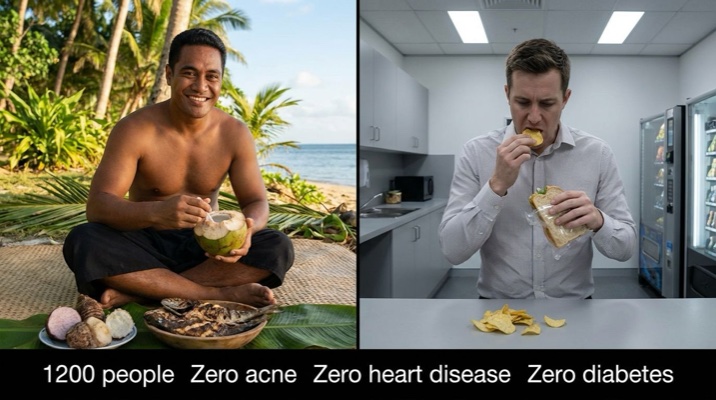
Those are not slogans. They are design requirements. They come from watching someone you love get sick and realising the thing that made them sick was approved by the people selling it. They come from reading the research and discovering that the scientific community has known for decades that traditional populations do not develop the diseases we treat as inevitable -- and that nobody acted on it, because acting on it would cost the food industry money.
The precautionary principle says: if something might cause serious harm, do not permit it until you have proven it safe. We apply this principle to pharmaceuticals, to building materials, to chemicals in the workplace. We do not apply it to food. The substance you swallow once, under medical supervision, must pass a